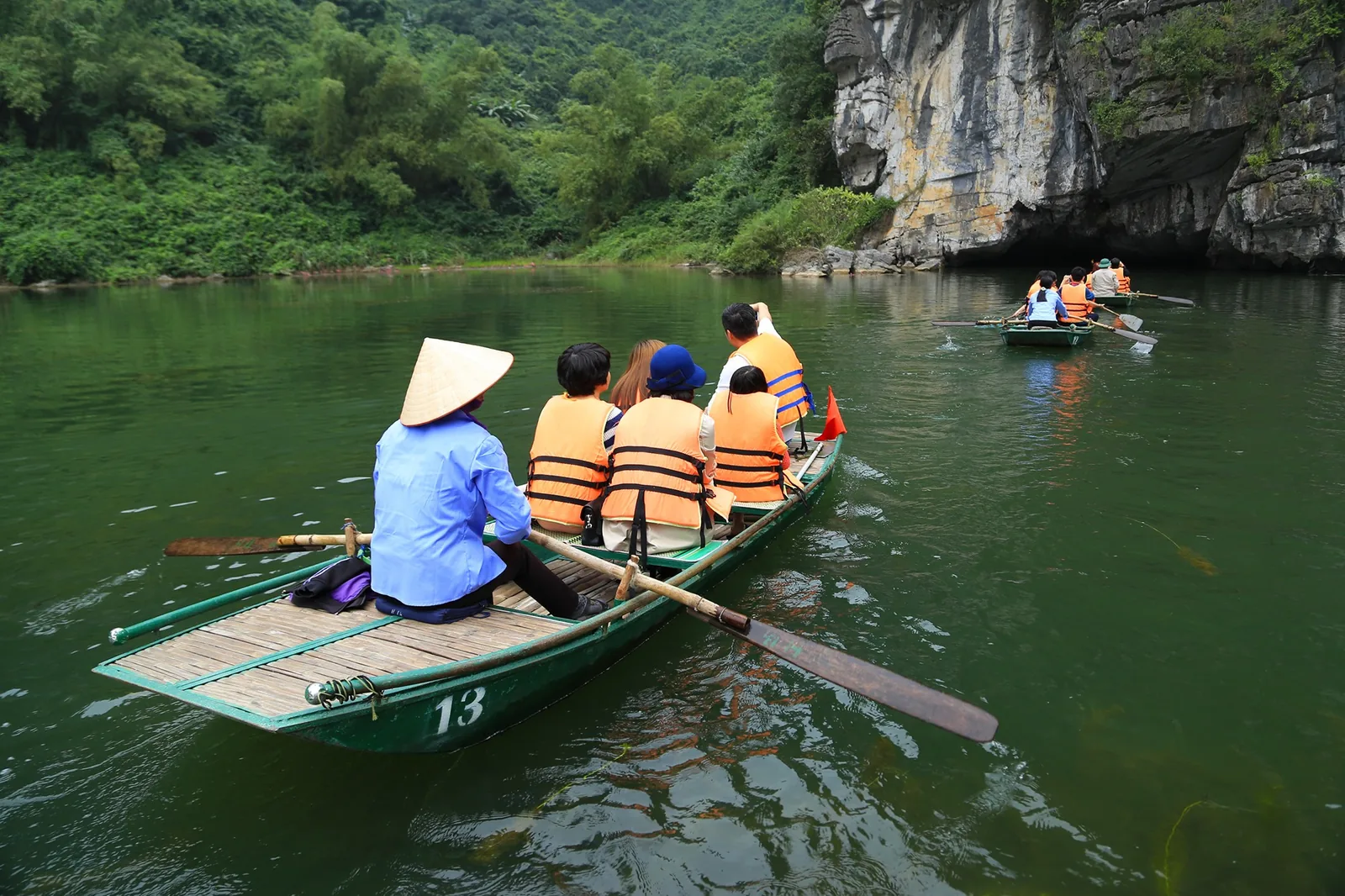
What travelling here with children is really like
Children are welcome almost everywhere in these four countries, and that is not a marketing line. Restaurants find a chair, strangers talk to your toddler, and nobody minds the noise. What causes trouble is the climate and the map. An afternoon in the open at thirty-five degrees ends the day early, and a five-hour transfer costs you the evening as well. So we plan in reverse: bedtime first, then swimming, then the driving, then whatever the parents were hoping to visit. Most of the sights survive that process. The over-full days do not.
Ages change everything. Under five, a trip is largely about the pool, short outings before ten in the morning and a room where everybody sleeps. Between six and eleven, boats, bicycles, buffalo, caves and a cooking class hold up well and are remembered years later. Teenagers do better with something that asks effort of them: kayaking, climbing, an overnight trek, or the harder parts of the war history, which often lands more heavily on them than on their parents. Tell us how old everyone will be on the departure date, not today, and whether anyone gets carsick.

What these trips look like
- Driving legs kept short, with the longest transfer placed the day after a rest rather than before one.
- A pool or a swimmable beach most afternoons, treated as part of the plan rather than a spare hour.
- Interconnecting or family rooms requested when we book, since hotels hold only a few and they go early.
- Outings before ten in the morning or after four, leaving the worst of the heat unscheduled.
- Guides asked beforehand whether they enjoy working with children, because not all of them do.
- Car seats and boosters requested where they can be obtained locally, with a straight answer where they cannot.
- Dinner early, and a plain option on the table for anyone who has had enough of unfamiliar food.
Journeys in this style
We publish no fixed family route, and that is deliberate. A trip that suits a four-year-old and a trip that suits two teenagers share almost nothing beyond the country. Each family journey is drawn from scratch around the ages of the children, the school holiday you are tied to and how far anyone will move in a day. The journeys published elsewhere on this site are still a useful starting point: tell us which one appeals and how old everybody is, and we will show you what has to change.
Talk to us
Send us the ages of the children as they will be on the departure date, the dates your school term allows and the number of rooms you need. We will draft a route and mark the days we think are too long. Everything is quoted in writing once we know your dates and party size, including any child rates the hotels apply. Email info@zaratour.com or message +84 766 283 988.