How Laos works for travellers
Laos is the emptiest country we work in and the slowest to cross. It is long, folded into mountains in the north, and overwhelmingly rural, and the roads say so. The drive from Luang Prabang down to Vientiane is one of the finest in the region and it swallows most of a day; the new railway covers the same ground in about two hours. So the internal legs of a trip are usually that train, a short domestic flight, or a boat. Roads come last, and we cost them in hours rather than kilometres.
Nearly every itinerary begins in Luang Prabang, which is worth more than the two nights it normally gets. Past that the country opens out. There are river villages on the Nam Ou above Nong Khiaw, the stone jars scattered over the Xiengkhuang plateau, limestone caves you cross by longtail boat in the centre, and coffee farms on the Bolaven Plateau in the far south. Vientiane is a low-rise capital that most people pass through rather than settle into, which seems fair to us. Nothing moves quickly here. If a draft plan puts two long transfers inside three days, we will say so rather than sell it.
Where our travellers go
A first trip usually takes two or three of these. Beyond that, the hours in the car begin to outweigh what you get out of the window.
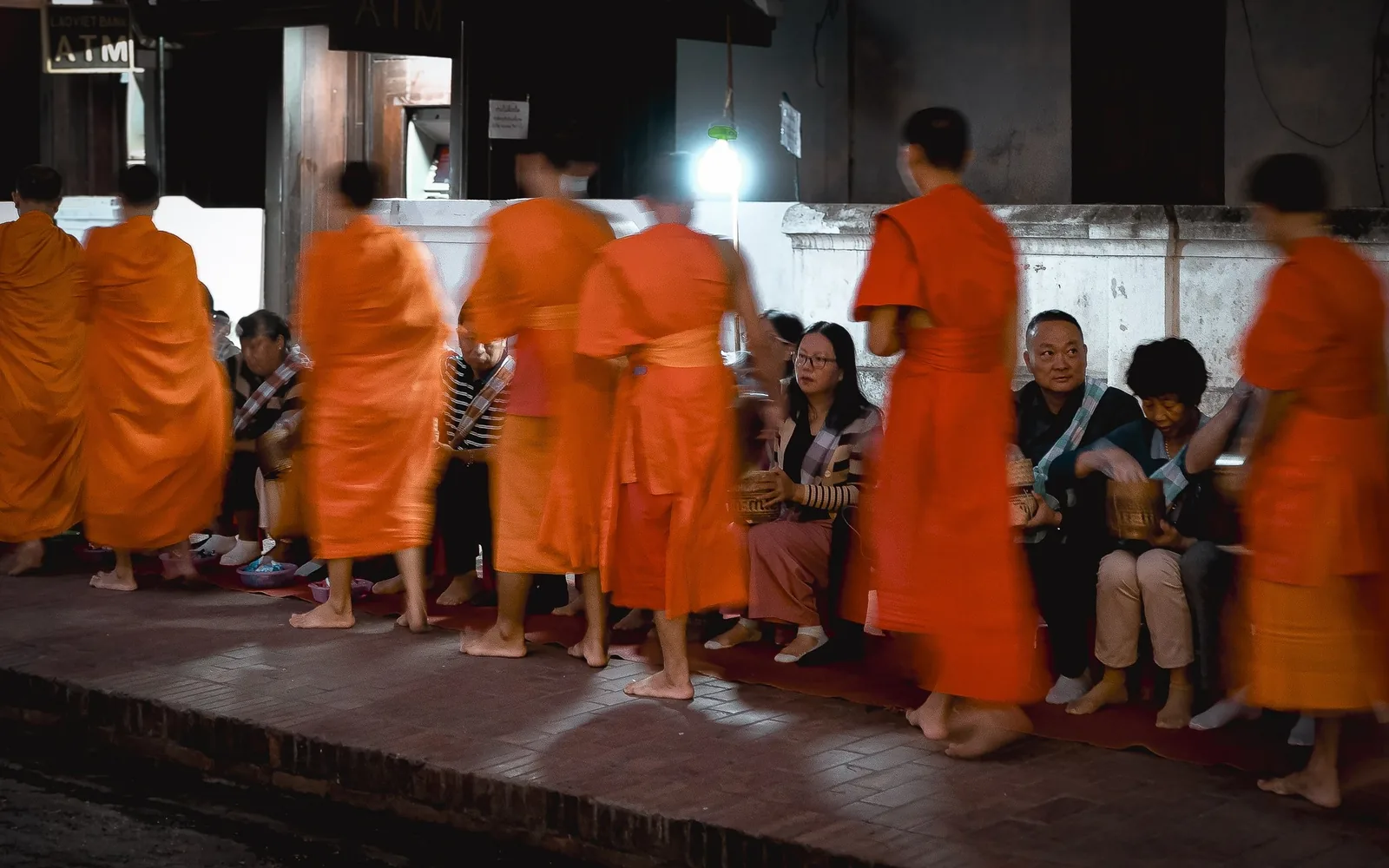
- Luang Prabang - temples, a night market and the dawn alms round, in a river town small enough to walk from one end to the other.
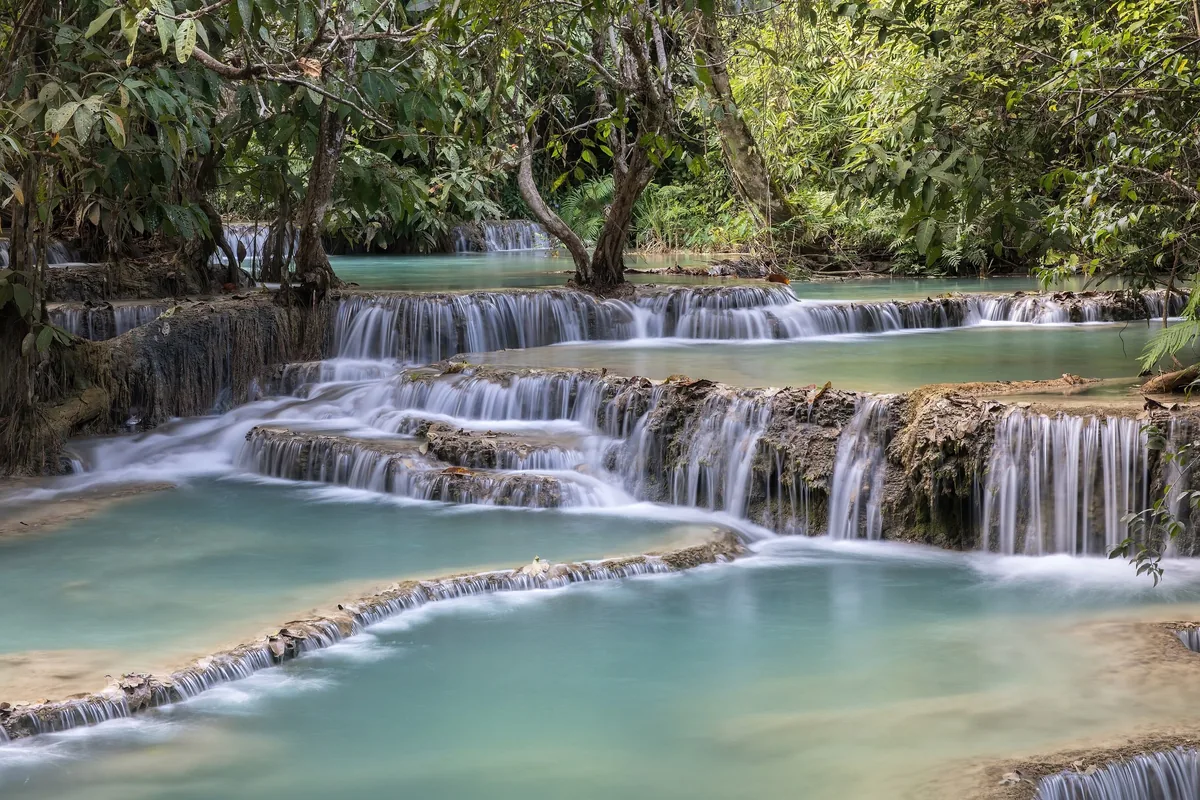
- Kuang Si falls - limestone pools an hour out of town, at their best late in the afternoon once the minibuses have gone.
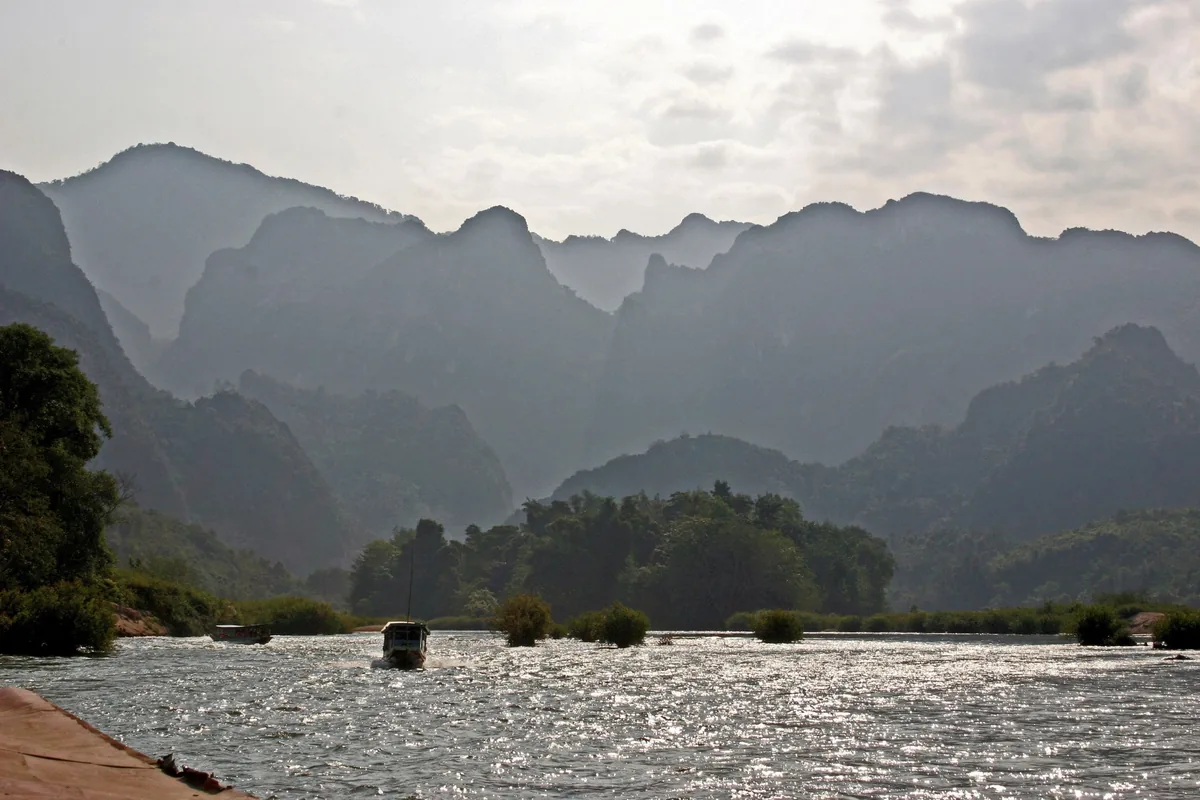
- Nong Khiaw and the Nam Ou - cliffs, river villages and slow boats up to Muang Ngoi, for anyone who wants a day with no schedule in it.
- Plain of Jars, Xiengkhuang - thousands of carved stone vessels on upland meadows, with a heavy bombing history around them.
- Vang Vieng - karst towers, caves and river lagoons; the town has calmed down a great deal and the landscape was always the reason to stop.
- Vientiane - the Mekong waterfront, That Luang and a French-inflected food scene; one night is usually the right amount.
- Kong Lor Cave - seven kilometres of river running straight through a mountain in central Laos, crossed by longtail in the dark.
- Pakse and the Bolaven Plateau - coffee estates, waterfalls and cool air a thousand metres above the southern plain.
- Si Phan Don, the Four Thousand Islands - the Mekong at its widest, with hammocks, rapids and very little asked of you.
- Wat Phou, Champasak - a hillside Khmer temple from the same world as Angkor, still quiet in the middle of high season.
When to go
The dry months, November through March, are when Laos is at its best: bright mornings, cold nights in the hills, rivers still high enough for boats early on. Two warnings. From late February into April the north burns its fields, and the haze can sit over Luang Prabang for weeks, flattening every view and now and then delaying flights. April is also the hottest month anywhere below the hills. Rain runs from May to October, greening everything and filling the waterfalls; it slows upland roads and occasionally closes one, but river travel improves and you will have most places to yourself.
| Region | Best months | What to expect |
|---|---|---|
| Northern Laos: Luang Prabang, Nong Khiaw, the Nam Ou | November to February | Clear skies, cool after dark, rivers runnable early in the season. From late February the burning season brings smoke and grey light. |
| The uplands: Xiengkhuang and the Plain of Jars | November to March | Cold at dawn on the plateau and bright by mid-morning. Bring a jacket in December and January. Wet months make the meadows heavy going. |
| Vientiane and central Laos, including Kong Lor | November to February | Warm days and dry roads, the easiest driving of the year. April is fierce. The cave river is low by March and boats sometimes cannot run it. |
| Southern Laos and the Bolaven Plateau | November to February | Dry, and noticeably cooler once you climb onto the plateau. Waterfalls are thin by March and at full volume from July to September. |
Our Laos journeys
Plan a trip to Laos
Send us your dates, the number of travellers and any fixed points - a flight already booked, a festival, a birthday - and a day-by-day draft comes back with the cost written out. Nothing on this page is a fixed departure, so the pace is yours: we would sooner take a stop out than put one in. If it is easier to talk it through, call or message +84 766 283 988, or write to info@zaratour.com.