What you are taking on
Laos runs about a thousand kilometres from top to bottom and the roads were not built for speed. Crossing it in eleven days means two long car transfers, one of them nine hours or more from Xiengkhuang to the capital, plus a domestic flight from Vientiane to Pakse. We put that at the top rather than halfway down the page.
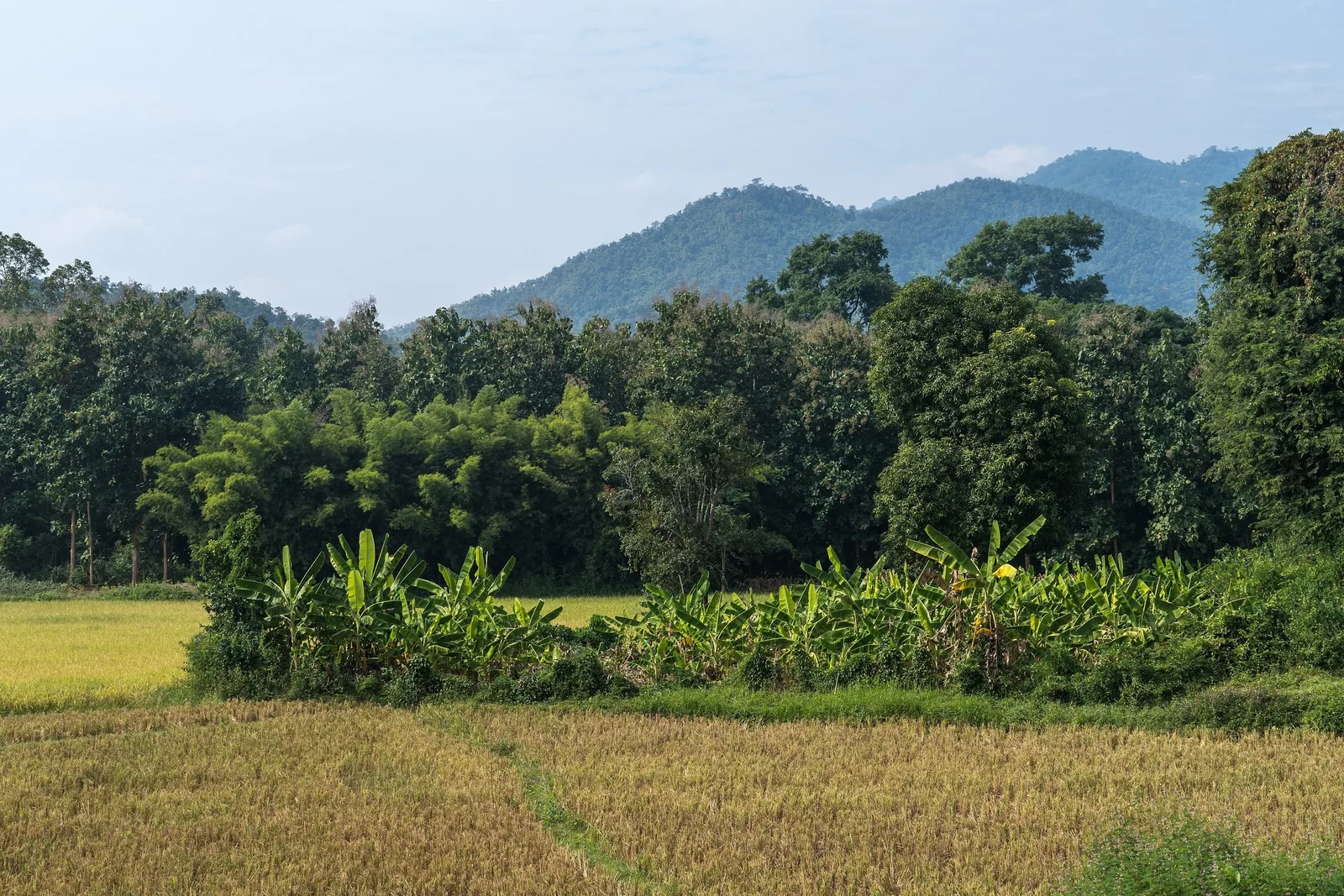
The hours buy real contrast. The north is mountainous and cool at night. Xiengkhuang is an upland plateau still marked by bombing, its prehistoric jars standing in fields that had to be cleared first. The far south is flat, hot and river-bound, where the Mekong splits into channels and islands.
Day by day
Day 1
Arrival in Luang Prabang, met at the airport and driven into the old quarter. Nothing is scheduled. Most people walk as far as the river, eat early and sleep, which is the right call given what the middle of this trip asks of you. Overnight in Luang Prabang.
Day 2
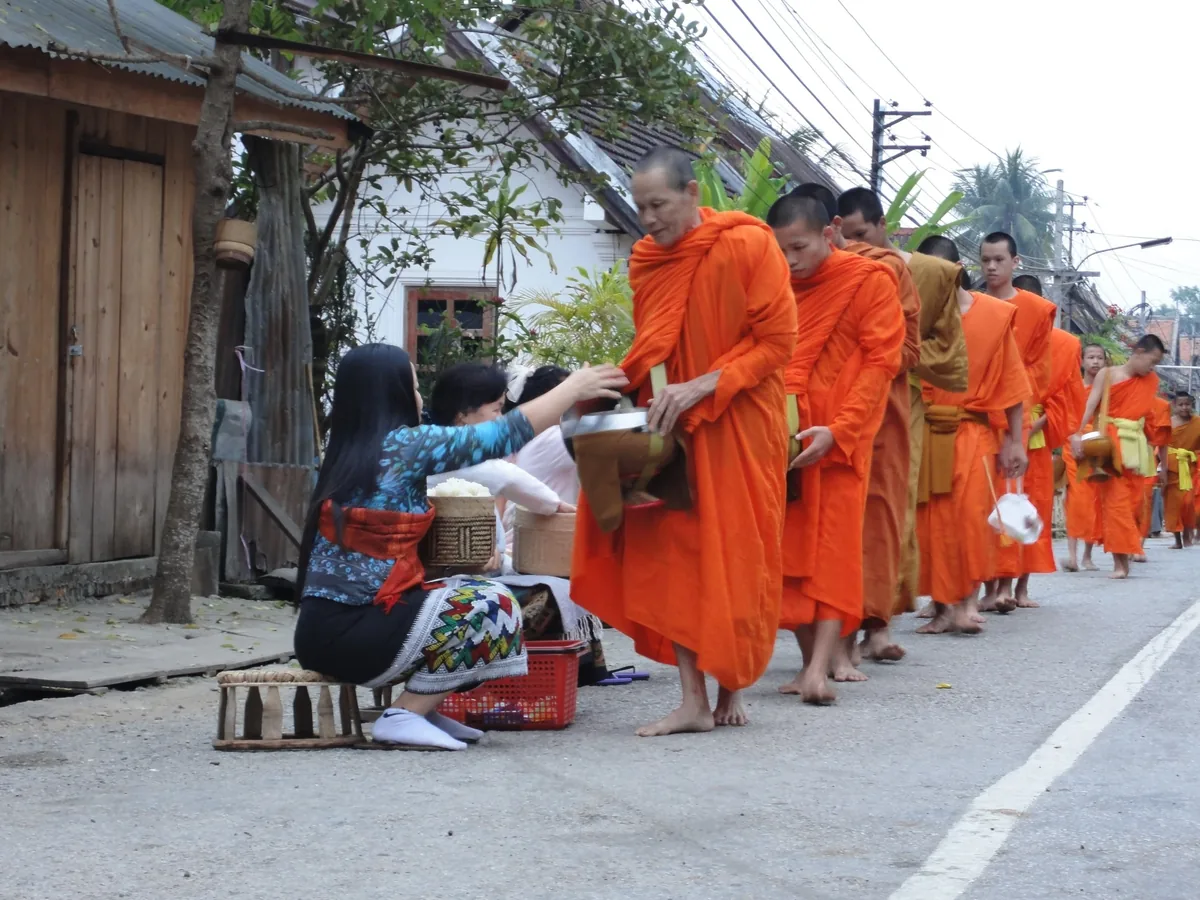
The morning goes to the town: the royal palace museum and the monasteries along the main street. After lunch a boat takes you two hours up the Mekong to the Pak Ou caves, where pilgrims have left Buddha images in two chambers above the water. You return downstream with the current, which is faster. Breakfast included. Overnight in Luang Prabang.
Day 3
A day outside town. You drive south through rice land and villages where mulberry paper and cotton are still worked by hand, then on to the Kuang Si falls to swim or climb the forest path above the terraces. This is the last easy scenery for a while. Breakfast included. Overnight in Luang Prabang.
Day 4
The first long drive: seven to eight hours east and south to Phonsavan, climbing out of the river valley onto high open country. The road is sealed and slow, with market stops and a roadside lunch. Scrap metal from the war turns up in villages along the way, used as fence posts and planters. Breakfast included. Overnight in Phonsavan.
Day 5
A full day at the Plain of Jars. Two or three sites are visited, each a scatter of carved stone vessels on bare hillsides, some large enough to stand in. Clearance teams have marked safe ground with concrete blocks and you stay between them. Afternoon calls at nearby villages. Breakfast included. Overnight in Phonsavan.
Day 6
The hardest day, and there is no way to shorten it. You leave early, pause at Muang Khoun, the old provincial capital left in ruins by bombing, then descend the long road to Paksan on the Mekong before turning west for Vientiane. Nine hours or more with stops, arriving in the evening. Breakfast included. Overnight in Vientiane.
Day 7
A recovery day disguised as a city tour. Wat Si Saket with its walls of niched Buddha figures, the former royal temple of Haw Phra Kaew, and the gilded stupa of Pha That Luang. The COPE visitor centre, which deals with the ordnance still being cleared up north, lands differently now. Breakfast included. Overnight in Vientiane.
Day 8
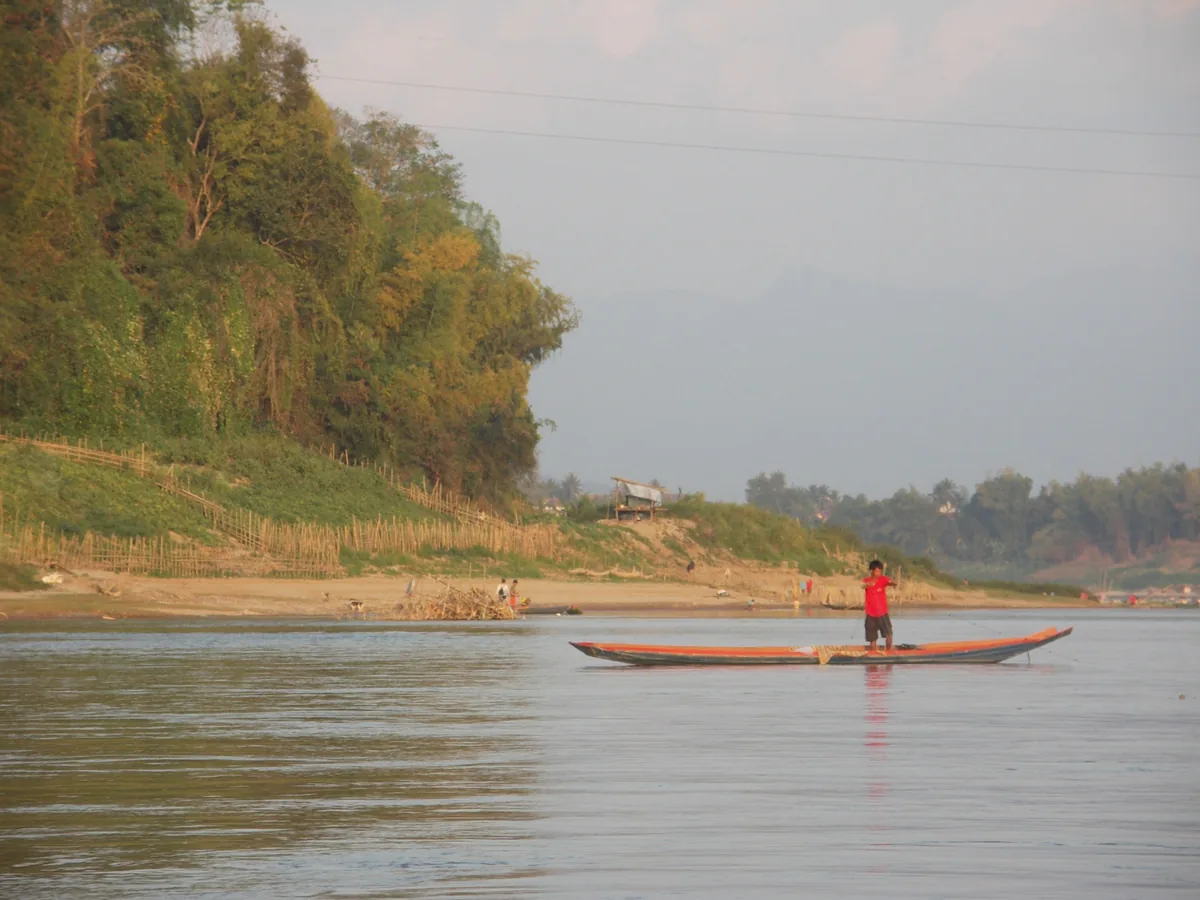
Transfer to the airport for the flight south to Pakse, a little over an hour in the air, then three hours by road down the Mekong to Don Khong, the largest island in the Si Phan Don group, reached by bridge. The heat changes noticeably. The evening is free to watch the fishing boats come in. Breakfast included.
Day 9
A day on and between the islands. By local boat you cross to Don Khon, where the piers of a short colonial-era railway still stand, then walk or cycle to the Li Phi rapids. Later you reach Khone Phapheng, the widest falls on the river. Rare freshwater dolphins live in the pools nearby; sightings are not guaranteed. Breakfast included.
Day 10
North again, climbing onto the Bolaven Plateau where the air cools and coffee grows on red volcanic soil. You stop at Tad Lo, a set of falls on the Se Set river, and can see how the beans are picked and dried. Around five hours of driving, broken up. Breakfast included. Overnight in Pakse.
Day 11
Breakfast, then time to spare depending on your departure. The morning market in Pakse is worth an hour, and Wat Phou, the Khmer temple ruins upriver, can be added if your flight is late enough. The journey ends at the opposite end of the country from where it began.
What the price covers
- Ten nights in hotels and island lodgings agreed with you beforehand, breakfast daily
- Domestic flight from Vientiane to Pakse, checked baggage included
- Private air-conditioned vehicle and driver for every road leg, including days four and six
- Licensed English-speaking guides in each region, changing as you cross the country
- Private boats to the Pak Ou caves and between the islands of Si Phan Don
- All entrance and site fees named in the day-by-day
- Airport transfers at both ends and drinking water throughout
- Planning, all reservations and a local contact reachable at any hour
Not included
- International flights in and out of Laos
- Visa fee and any border costs
- Lunches and dinners across the eleven days
- Travel insurance, which is a condition of travelling with us
- Bicycle hire on the islands, tips, laundry and drinks
- The optional excursion to Wat Phou on the final morning
Good to know
Fitness matters less here than patience. The walking is moderate: uneven ground at the jar sites, steps at the caves, flat island tracks. What wears people down is the driving. Two days are spent almost entirely in a car, and rural Laos has few places to stop. Anyone who suffers in vehicles should say so before we confirm.
- November to February is the best window, though nights on the plateau need a fleece while the south stays hot.
- March and April bring high heat and smoke haze in the uplands from burning fields.
- From May to October the rain is heavy in the south and side roads soften, though the falls are at full force.
- Unexploded ordnance is a real hazard in Xiengkhuang. Stay on marked paths and never handle metal debris.
- Island rooms are simple: fans or modest air conditioning, patchy hot water, occasional power cuts. There is no smart alternative on Don Khong.
- Internal flights move at short notice, so we leave slack around the Pakse leg.
Plan this trip
- Days
- 11
Sending this does not charge you. We hold the space and confirm within 24 hours.
Send us your dates, the number of travellers and how much driving you will accept in a day. We price the route in writing, with the hotels named.