A classic route, taken at a workable pace
This is the best-known line through Indochina, and fifteen days is what it takes to do it without watching the region through a car window. You open in Siem Reap with three nights at Angkor, cross to the Cambodian capital, fly on to Ho Chi Minh City, work down into the Mekong Delta, then jump north to Hanoi, the hills of Ba Vi and a night afloat in Halong Bay. Most stops get two nights or more, which is the difference between seeing a place and passing it.
It suits a first long trip to the region: the sights people come for, without a coach party or a raised umbrella to follow. You have your own guide and driver in each country, and the shape of a day can change on the morning if the heat or your legs say so. Two short flights carry the long distances, Phnom Penh to Ho Chi Minh City and then Ho Chi Minh City to Hanoi, so no day disappears into a road transfer.
Day by day
Day 1
You land in Siem Reap and are met in the arrivals hall, then driven into town. The rest of the day is yours to sleep off the flight. Late in the afternoon your guide walks you round the old market quarter and sets out how the temple days will run. Dinner on your own account.
Day 2
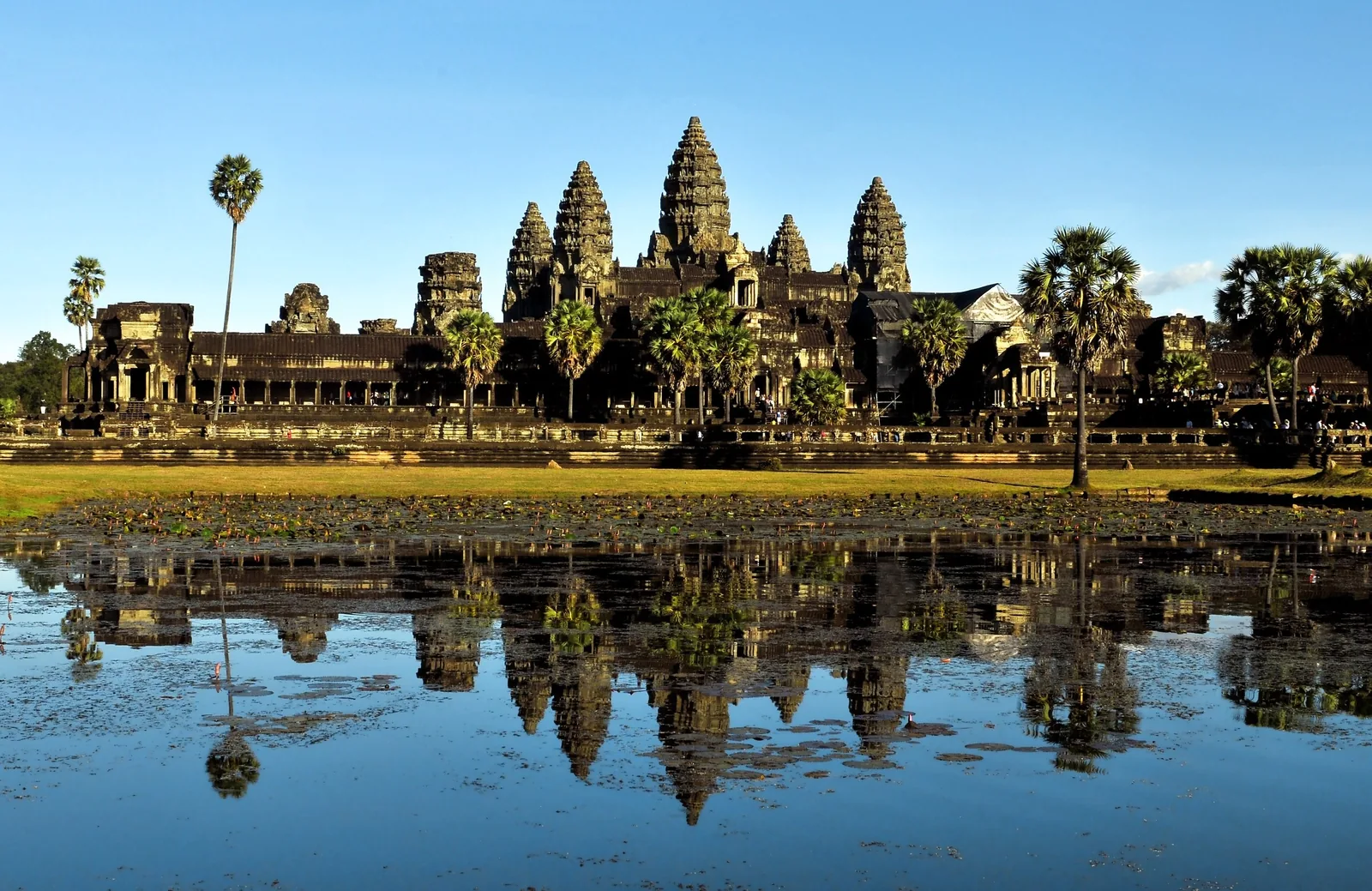
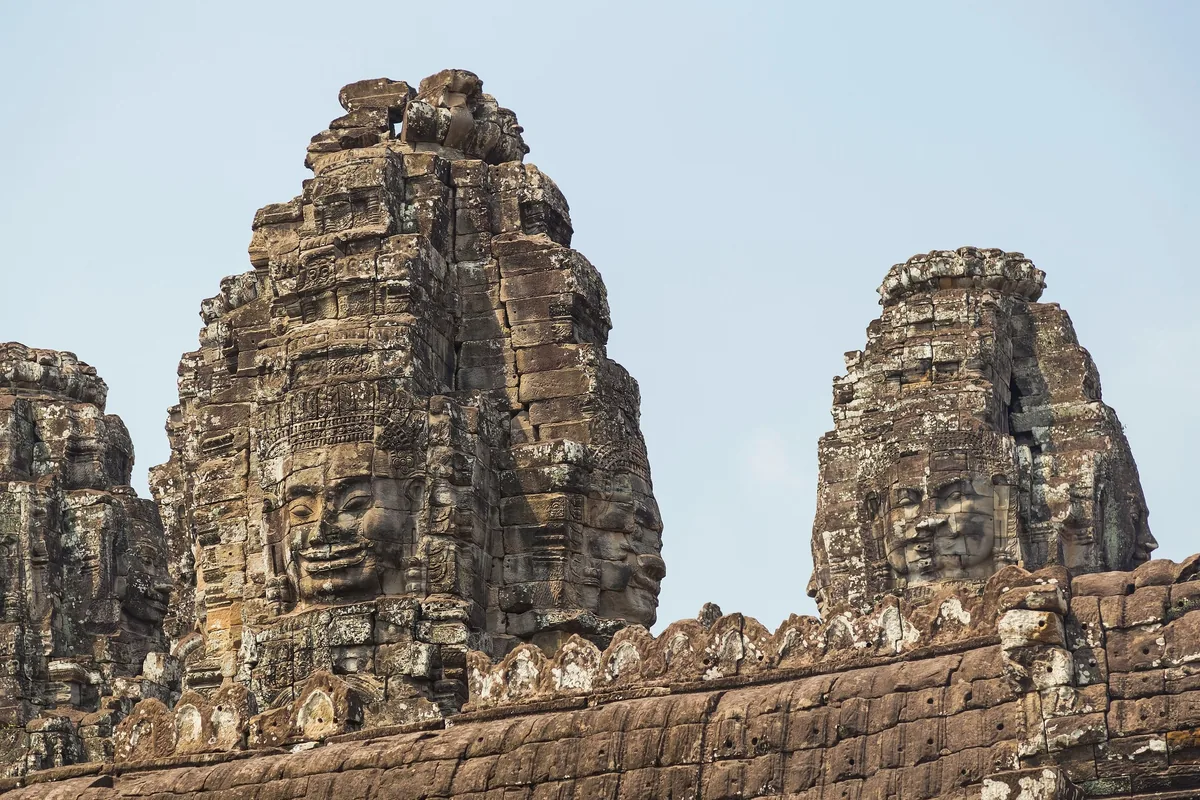
An early start, while the sandstone is still cool. You cross the causeway into Angkor Wat and read the bas-reliefs with your guide, then move on to Angkor Thom, the Bayon and the elephant terrace. Lunch in the shade near the park gate. Ta Prohm in the softer afternoon light, roots over walls.
Day 3
A quieter Angkor day. You drive out to Banteay Srei, small and carved in pink stone at a level of detail the big temples never attempt, with a palm sugar workshop on the road back. The afternoon goes to Tonle Sap, where houses stand on stilts and the water line tells you the season.
Day 4
A road day, five to six hours by private car across the plain to Phnom Penh, broken by coffee and a leg stretch. Lunch is at a roadside kitchen your driver rates. You arrive in the afternoon and, if anything is left in you, walk the riverfront where the Tonle Sap meets the Mekong.
Day 5
The morning takes in the Royal Palace, the Silver Pagoda and the Khmer sculpture at the National Museum. After lunch comes the harder half: Tuol Sleng and the memorial at Choeung Ek. Your guide will say plainly what you are about to see, and either can be dropped if you would rather not.
Day 6
A short flight over the border to Ho Chi Minh City, under an hour in the air. You drop the bags, then walk District 1 in the afternoon: the central post office, the old Opera House, and a coffee on a low plastic stool while the traffic sorts itself out.
Day 7
North-west to Cu Chi, about ninety minutes out, for a morning in the tunnels: hidden trapdoors, cooking chambers, smoke vents dug out far from the kitchens. One stretch has been widened for visitors and is still tight and warm. Back in town for the War Remnants Museum, if you want it.
Day 8
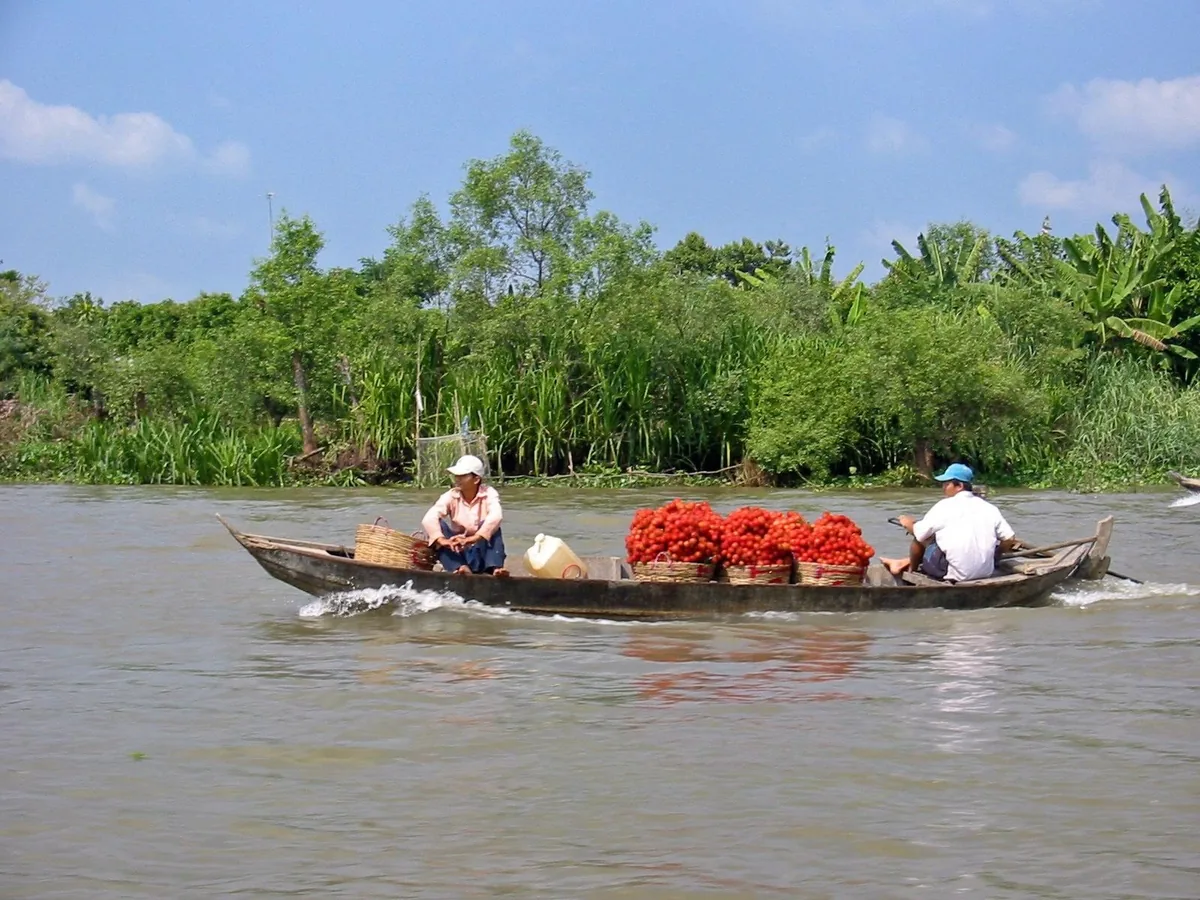
South into the delta. You board a boat and thread through channels lined with water coconut, stopping at a family workshop boiling coconut sweets and at a fruit orchard. Lunch is fried elephant-ear fish rolled in rice paper with a fist of herbs. On to Can Tho for the night.
Day 9
Out before six for Cai Rang, where wholesalers trade boat to boat and each hull advertises its cargo on a tall pole. It is a working market, not a performance, and it thins by eight. Breakfast comes to you on the water, then the drive back to Ho Chi Minh City.
Day 10
A slow morning, then the flight north. Hanoi runs cooler than the south for much of the year and the streets are tighter. Your guide meets you for a first circuit of the Old Quarter: thirty-six trade streets round a lake, and an evening crowd that takes over the pavement.
Day 11
A day out of the city in Ba Vi, ninety minutes west, where the rice land runs up against hills. You walk a section of the national park, look back over the Red River valley when the cloud lifts, and eat lunch with a local family: hill chicken, bamboo shoot, rice.
Day 12
Hanoi properly. The Temple of Literature, the mausoleum complex from the square, the One Pillar Pagoda, and the Museum of Ethnology, the most useful hour in the city for working out who lives where in Vietnam. The afternoon is free, the evening a bowl of bun cha over charcoal.
Day 13
The drive east takes about two and a half hours on the expressway. You board mid-morning and the boat pulls out among the limestone islands while lunch is served. A kayak into a quiet inlet in the afternoon, a cave, a swim if the season allows. Dinner and the night on board.
Day 14
Tai chi on the sun deck for anyone awake, then breakfast while the boat works back through the karst, usually with one more grotto on the way. You step ashore around midday and reach Hanoi in the afternoon. The evening is yours, with a map marked up by your guide.
Day 15
A slow last morning. If your flight is late, leave the bags at reception and go back for the one thing you missed: an egg coffee on Nguyen Huu Huan, a final lap of Hoan Kiem lake. We drive out to Noi Bai with margin for Hanoi traffic.
What the price covers
- Fourteen nights of accommodation with breakfast, in rooms we have seen ourselves
- One of those nights in a private cabin on a Halong Bay boat, all meals on board
- Flights Phnom Penh to Ho Chi Minh City and Ho Chi Minh City to Hanoi, with checked baggage
- A private air-conditioned vehicle and driver throughout, in both countries
- English-speaking local guides in Cambodia, the south of Vietnam and the north
- Every meal marked in the day-by-day above
- Entrance fees for the temples, museums and parks named in the itinerary
- Boat trips on Tonle Sap, in the Mekong Delta and around Halong Bay
- Arrival meeting in Siem Reap and the departure transfer in Hanoi
Not included
- International flights into Siem Reap and out of Hanoi
- Entry permits and e-visa charges for Cambodia and Vietnam
- Travel insurance, which we ask every traveller to hold
- Drinks, laundry, tips and anything else personal
- Meals not listed in the day-by-day
Good to know
Fifteen days over two countries involves a fair amount of moving, though the pace is moderate rather than hard. Expect two early mornings, Angkor and Cai Rang, and one long road day between Siem Reap and Phnom Penh. You should be comfortable walking two or three hours on uneven stone and climbing steep temple stairs. Cambodia and southern Vietnam are hot and humid all year; the north turns cool and damp from December to February.
- March to May is the hottest stretch at Angkor and in the delta, so sightseeing moves to the ends of the day
- Shoulders and knees must be covered at Angkor Wat and at temples in Vietnam; bring light long trousers
- The port authority can hold cruise boats in harbour in bad weather, and we rebuild the day when that happens
- Cambodia runs on US dollars alongside the riel, Vietnam on dong only, and small notes are the useful ones
- Tuol Sleng and Choeung Ek are hard places and not suitable for younger children
- The internal flights are short but timings shift, so both of those days are kept deliberately light
Plan this trip
- Days
- 15
Sending this does not charge you. We hold the space and confirm within 24 hours.
Send us your dates and who is travelling, and we will come back with a day-by-day plan and a price in writing.