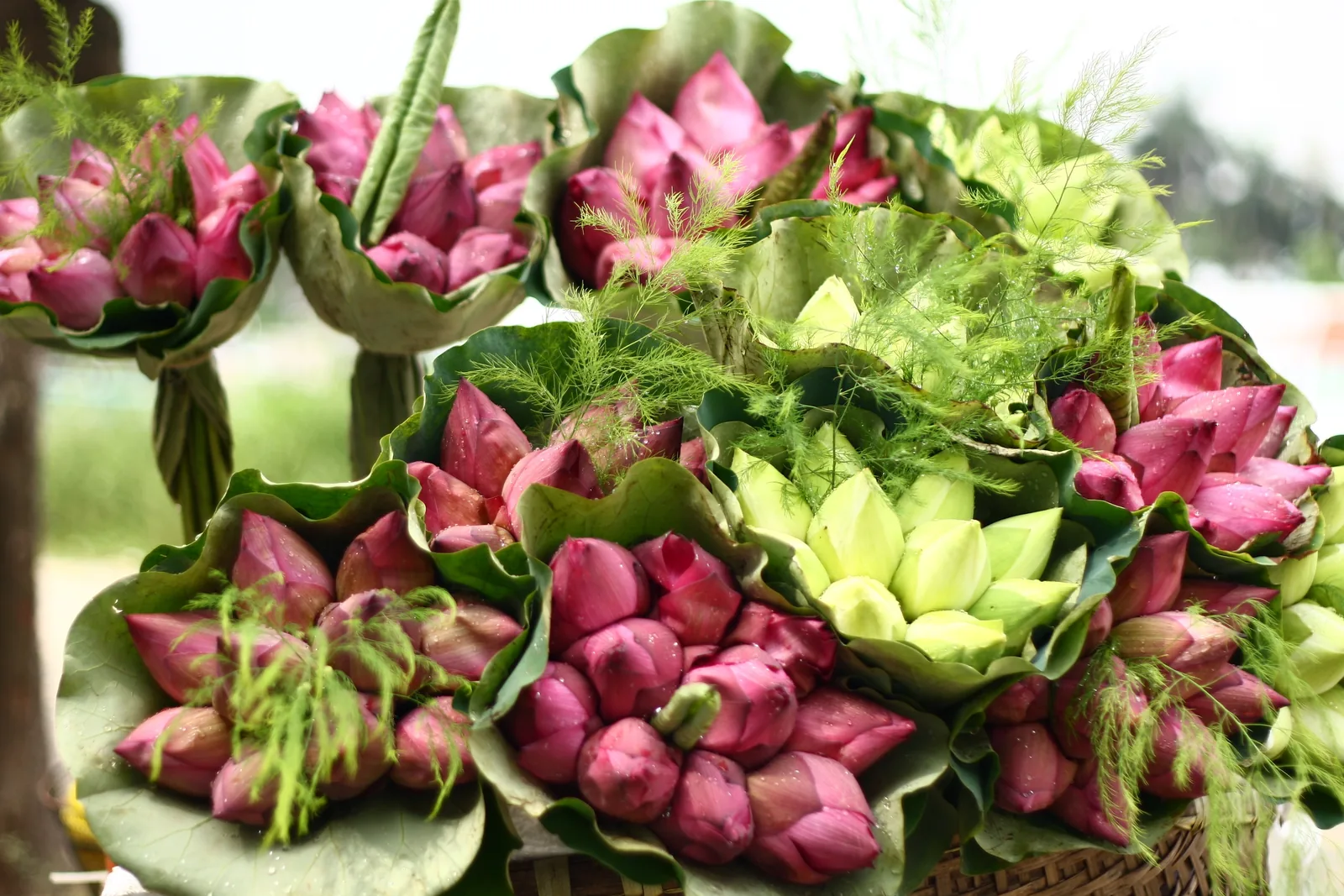
Vietnamese cooking is not one cuisine. The north keeps salt, broth and restraint; the old court at Hue turned dishes into small, fussy, beautiful things; the south adds sugar, herbs and whatever the river gave up that morning. Eleven days is long enough to taste the argument between them.
You will be at market stalls at six in the morning, at a chef's counter with a knife in your hand, at a family table in Hue and on a low plastic stool in a Saigon lane. Between those meals sit the places worth seeing anyway: the bay, the citadel, the old port town, the delta.
Day by day
Day 1
A driver collects you at Noi Bai and brings you into the city. Rest first. When you are ready, your guide walks you out for the simplest possible introduction: a bowl of pho at a shop that sells nothing else, then coffee thickened with condensed milk on a stool by the kerb. Overnight in Hanoi.
Day 2
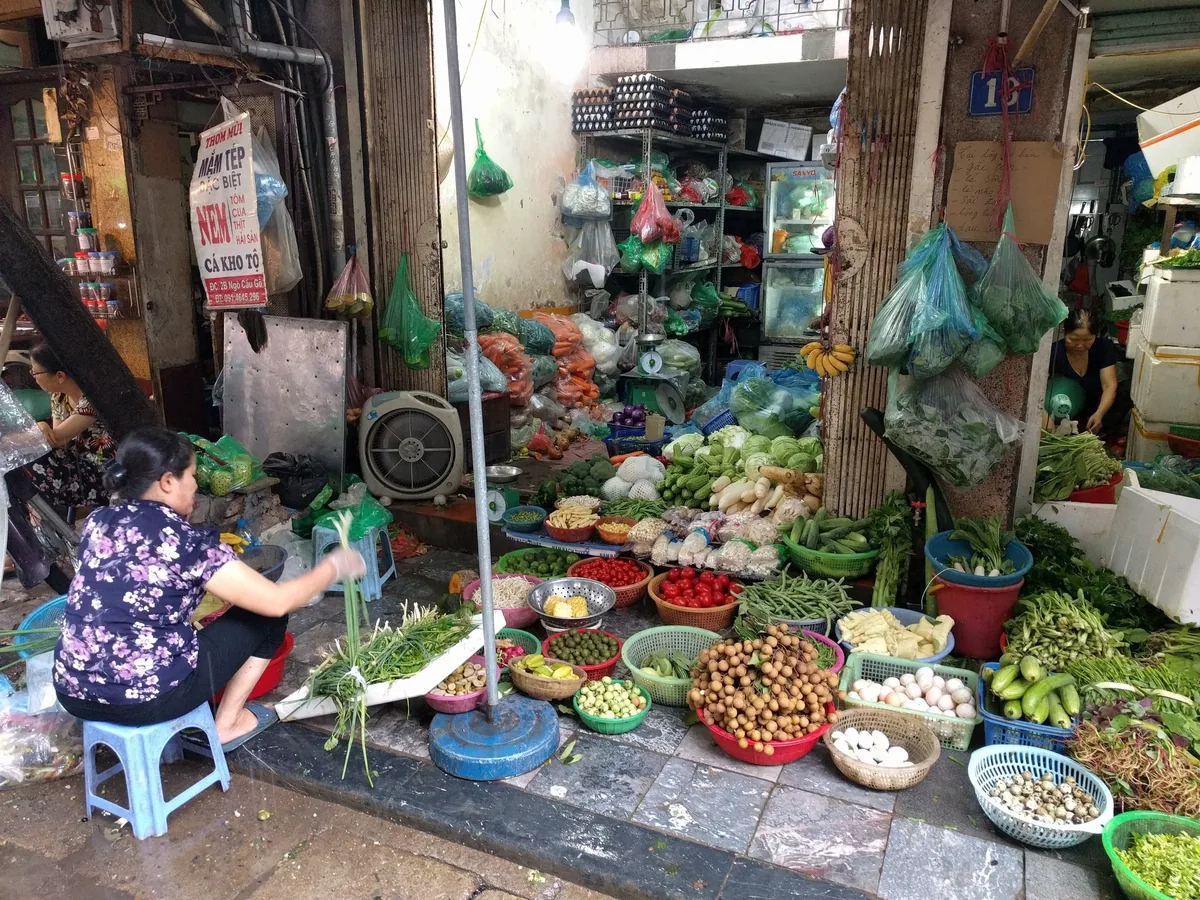
The kitchen day. You meet a chef at a neighbourhood market and shop with him: herbs, river fish, three kinds of rice paper, the small dried shrimp northern cooks lean on. Back at the counter you cook four dishes and eat them as lunch. The evening is free, with a list of places worth the walk. Overnight in Hanoi.
Day 3
A morning drive east to the coast and on board in Halong Bay by midday. Lunch at sea is mostly shellfish and squid brought out by the boat's own supplier. The afternoon holds a cave and a kayak. Dinner is cooked on board and eaten under the limestone. Overnight on the bay.
Day 4
The bay is quietest at dawn, before the fleet moves. Breakfast, a short cruise, and ashore by late morning. You transfer back towards Hanoi for an afternoon flight to Hue, about eighty minutes. Hue is warmer and slower. The first evening there is yours, and the riverside is the place to walk. Overnight in Hue.
Day 5
Morning inside the citadel, in the walled palace of the Nguyen emperors, which explains the food better than any menu. Lunch takes in the city's own dishes, among them the beef noodle soup Hue is known for. Dinner is at Ngoc Son Princess House, where the court style is cooked and served as it was.
Day 6
South over the Hai Van pass, three to four hours with the coast unrolling below the road. There is time to stop at the lagoon at Lang Co, where the oyster and clam beds are worked from flat boats. You reach Hoi An in the afternoon and the old town is a short walk from your hotel. Overnight in Hoi An.
Day 7
A free day, which in Hoi An means eating. The central market has a cooked-food hall at one end. Cao lau, the town's thick noodle, is made with water from one particular well. Bicycles are free at most hotels and the herb gardens at Tra Que are twenty minutes away. Overnight in Hoi An.
Day 8
A slow start, then the short drive up to Da Nang for the flight south. Ho Chi Minh City is about ninety minutes away and a different country at dinner: louder, sweeter, more Chinese and more Khmer at once. Your driver meets you and the evening is free. Overnight in Ho Chi Minh City.
Day 9
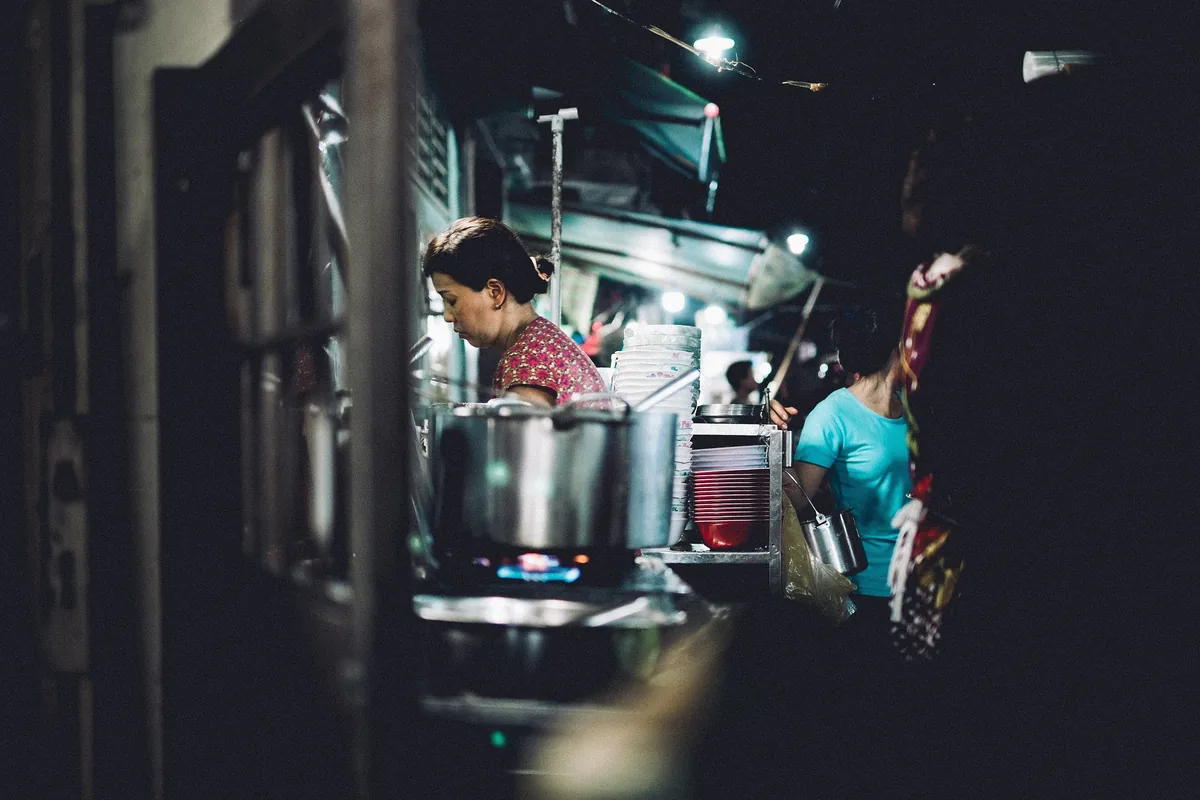
The city by mouthful. An afternoon and evening on foot or on the back of a scooter, depending on your nerve, working through six or seven stops: broken rice with grilled pork, a southern noodle soup, snails cooked a dozen ways, sweet soup to finish. Overnight in Ho Chi Minh City.
Day 10
Down to the Mekong Delta, two hours by road, then on to the water. You pass floating fish farms and fruit orchards, stop at a workshop where coconut is boiled down to sweets, and eat lunch at a riverside house. A rower takes you up a creek too narrow for the boat. Overnight in Ho Chi Minh City.
Day 11
One last breakfast, and one last errand if the timing allows: Ben Thanh market for pepper, dried shrimp and vacuum-packed coffee, all of which travel well. Allow three hours before take-off, since the road to the airport is slow at almost any time of day.
What the price covers
- Ten nights: nine hotels agreed between us, one cabin aboard a cruise boat on the bay
- Flights within the country, Hanoi to Hue and Da Nang down to Ho Chi Minh City
- A car and driver held for you throughout, with no shared transfers
- Guides in English in each city, all of them cooks or keen eaters
- The market shop and cooking class in Hanoi, with the recipes written out for you
- The street food walk in Ho Chi Minh City and everything eaten on it
- Dinner at Ngoc Son Princess House in Hue
- Breakfast daily plus the other meals marked in the plan
- Admission charges, boats in the bay and the delta, drinking water in the car
Not included
- Flights into and out of Vietnam
- Visa fees, whatever form your passport requires
- Insurance cover, which we expect you to carry
- Meals on the free days, and drinks beyond those poured with included meals
- Gratuities, laundry and personal spending
- Sole occupancy supplement where a room is not shared
Good to know
Physically this is an easy trip. The demands are elsewhere: early markets, long lunches and a street food evening that keeps going. Tell us before you travel about allergies or a vegetarian diet, because fish sauce and pork stock sit underneath a great deal of Vietnamese cooking and substitutions are arranged with the cooks in advance.
- Stalls close and new ones open. We name dishes rather than addresses, and guides check what is trading the week you arrive.
- Vegetarian and vegan versions of every session are possible with notice. Coeliac diets are harder: soy sauce and some noodles carry wheat.
- Hue and Hoi An take heavy rain from late September into November, and the old town there floods most autumns.
- Ice at established stalls is made commercially and is safe. Carry bottled water anyway.
- Chilli is mild in the north and serious in the centre. Say so early and cooks will adjust.
Plan this trip
- Days
- 11
Sending this does not charge you. We hold the space and confirm within 24 hours.
Tell us your dates, how many are travelling and what you cannot eat, and the quote follows in writing with the full plan.