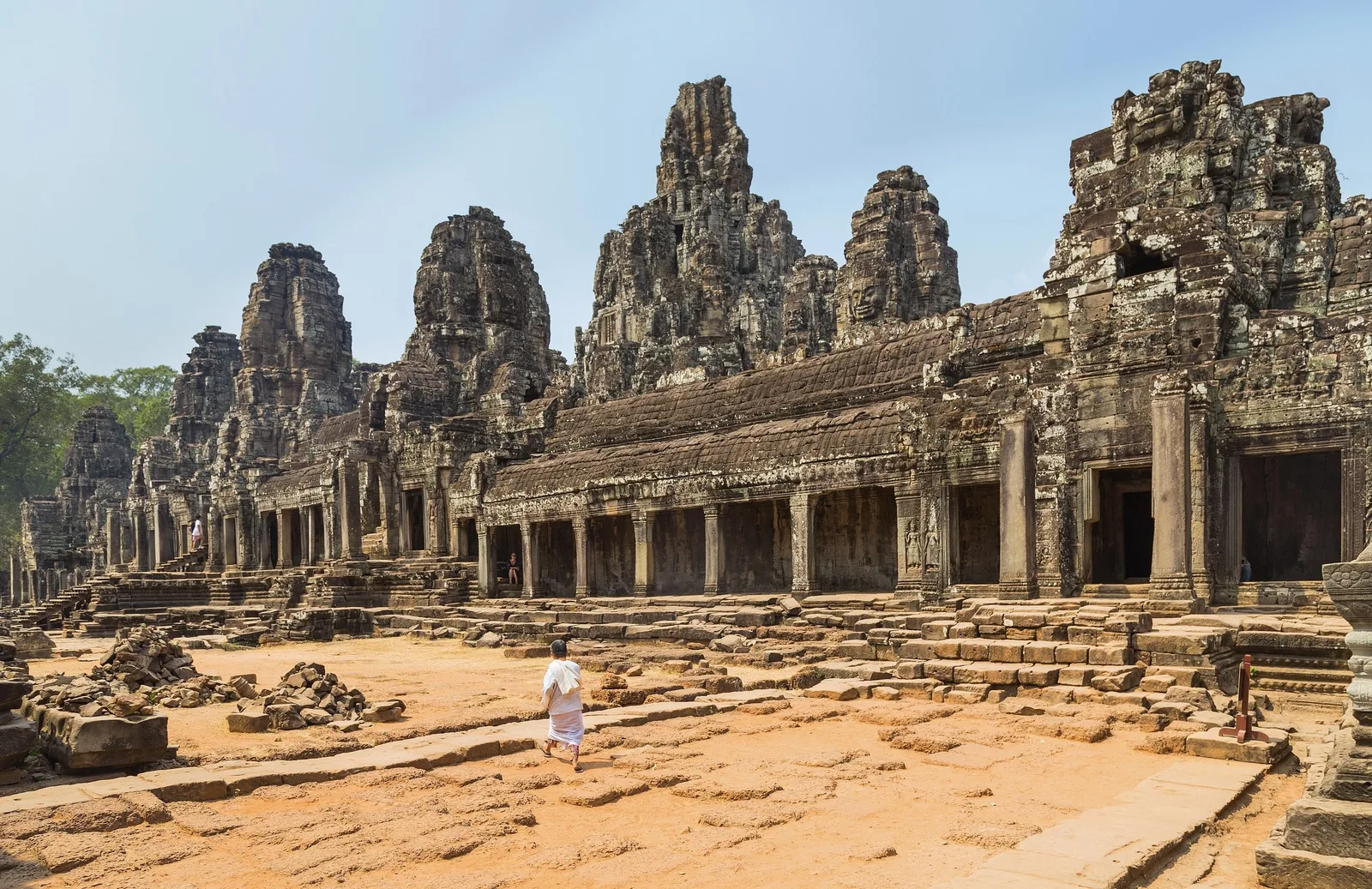
Not one civilisation with four flags
Cambodia holds what is left of the Khmer empire, whose masons were at work on Angkor while Europe was starting its cathedrals. Vietnam spent a thousand years under Chinese rule, built a dynastic capital of its own at Hue, then took a French century and a war that remains within living memory. Northern Thailand belonged to Lanna, a kingdom with its own script and its own temple silhouette, and kept Bangkok at arm's length for a long time. Laos looks back to Lan Xang and forward through a bombing campaign that left ordnance in the soil. Separate stories, separate buildings, separate silences.
What makes this style work is the guide, and we pick them by subject rather than by whoever is free that week. Someone who can put the Bayon, the Baphuon and Angkor Wat into sequence, or explain why the tombs outside Hue face the direction they do, is worth more to a morning than an extra site. We also build the day around the heat. Large temples are seen at opening or in the last hours of light, war sites are followed by a quiet afternoon, and nobody is asked to take in three museums before lunch. Say if you would rather have some days unguided. Plenty of people do.
What these trips look like
- Guides matched to the period you care about, and briefed on how much detail you want.
- The large temple complexes visited at opening or in the final two hours of daylight.
- Timed tickets and site permits arranged in advance wherever a monument requires them.
- A quiet afternoon written in after the heavier war sites, rather than another stop.
- One museum a day at most, and none at all where the collection does not repay the hour.
- Notes on dress sent before you travel, since shoulders and knees must be covered at temples and palaces.
- Unguided days built in on request, with the car and driver still there if you want them.
Journeys in this style
Talk to us
Tell us which periods interest you, how much guiding you want and which dates you are held to. We will draft the route with the guided mornings and the free days marked separately, so you can see where the effort falls. Every figure is quoted in writing once we know your dates and party size. Email info@zaratour.com or message +84 766 283 988.